

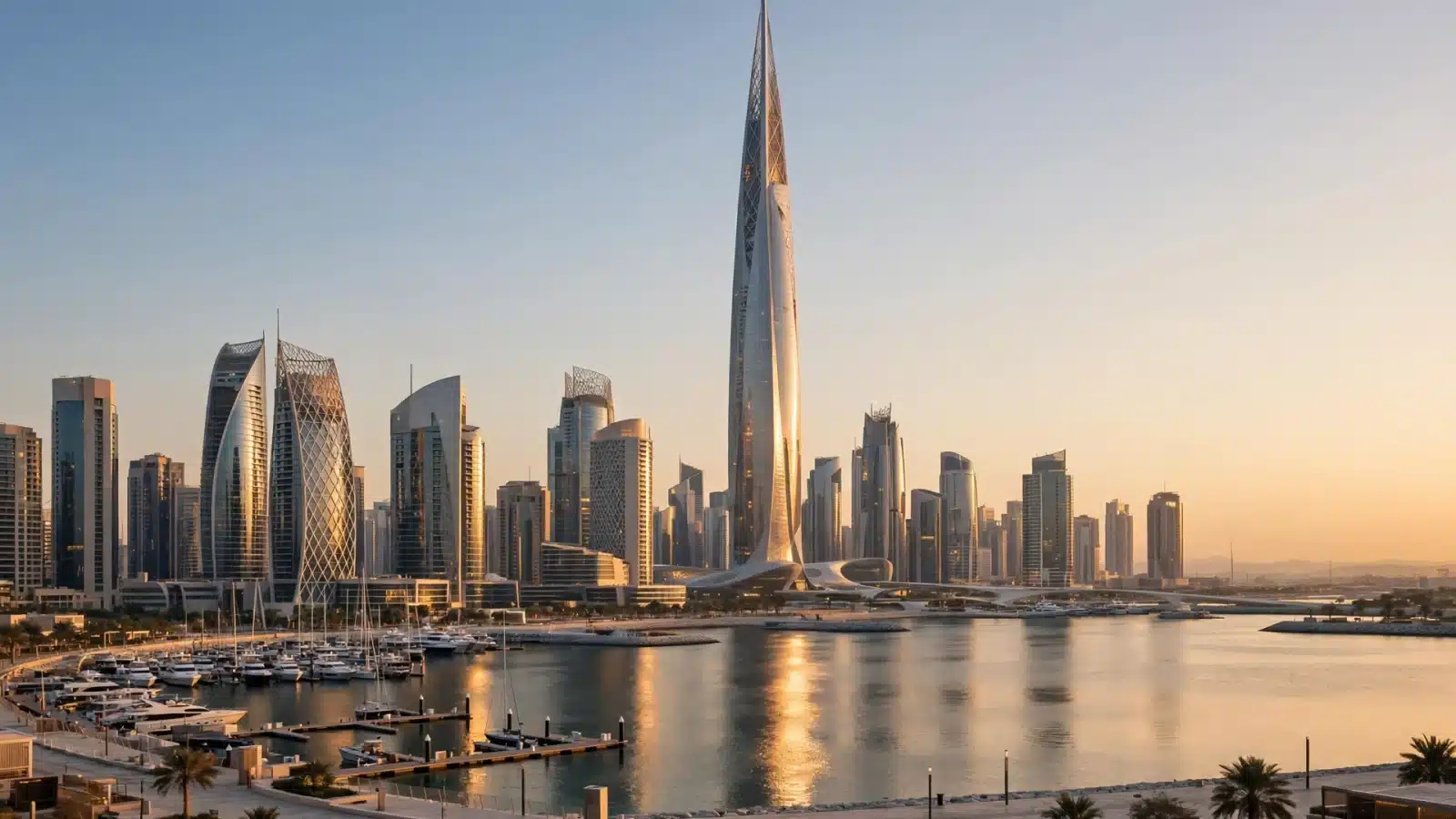
Ask most people about the UAE and they’ll name the malls and the skyscrapers — but this small country packs in far more than shopping. Within a couple of hours’ drive you can go from the world’s tallest tower to a 500-year-old mosque, from a floating museum dome to mountain peaks where the temperature drops and the silence is total.
Whether it’s your first trip or your fifteenth, these are the best places to visit in the UAE right now — a mix of headline icons and the quieter corners that show you what the Emirates looked like long before the skyline.
An editorial list: our picks, based on our own research and on public reviews and ratings — not a sponsored ranking. Details change, and images are illustrative (see the note at the end).
1. Burj Khalifa — Downtown Dubai
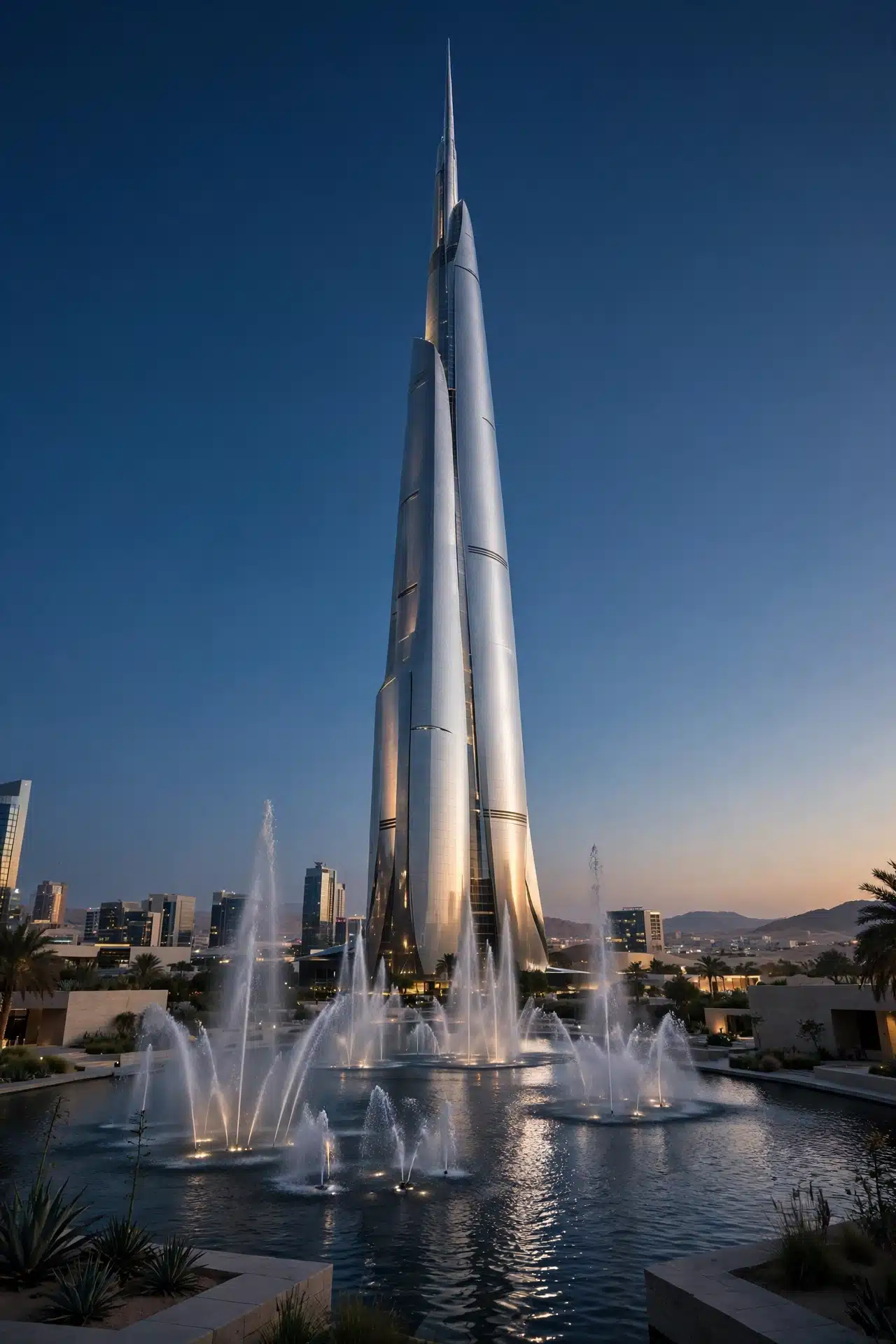
The tallest building on Earth needs no sales pitch. At 828 metres, the Burj Khalifa has defined Dubai’s skyline since 2010, and the observation decks on its upper floors still deliver the single most dramatic view in the country — the city, the desert and the Gulf laid out below you like a model.
Time your visit for late afternoon so you get the view in daylight, at golden hour, and then watching the city light up after dark. Tickets for the decks are timed and the sunset slots sell out first, so book ahead online. Pair it with an evening down at the Dubai Fountain, where the choreographed water shows play against the tower’s base.
2. Sheikh Zayed Grand Mosque — Abu Dhabi
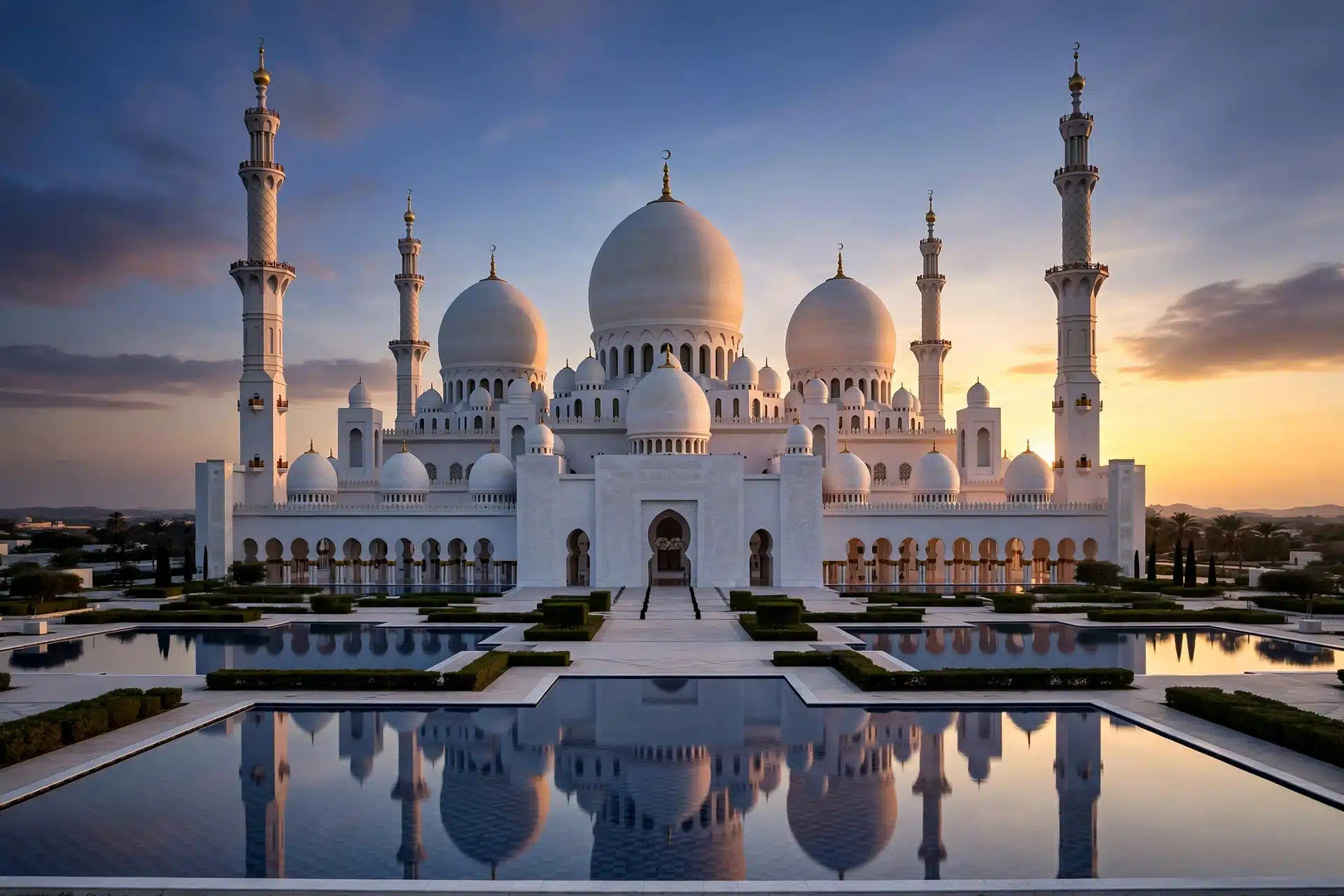
If the Burj is the UAE’s statement to the future, the Grand Mosque is its love letter to Islamic art. One of the largest mosques in the world, it rises in white marble with 82 domes, reflective pools and floral inlay work, and it welcomes visitors of all faiths — which makes it as educational as it is beautiful.
Go an hour before sunset if you can: the marble shifts from brilliant white to pale gold, and then the lighting takes over as the sky deepens. Entry is free, though visitors register in advance, and a modest dress code applies (abayas are available for women who need one). It is, quite simply, the most moving building in the Emirates.
3. Louvre Abu Dhabi — Saadiyat Island, Abu Dhabi
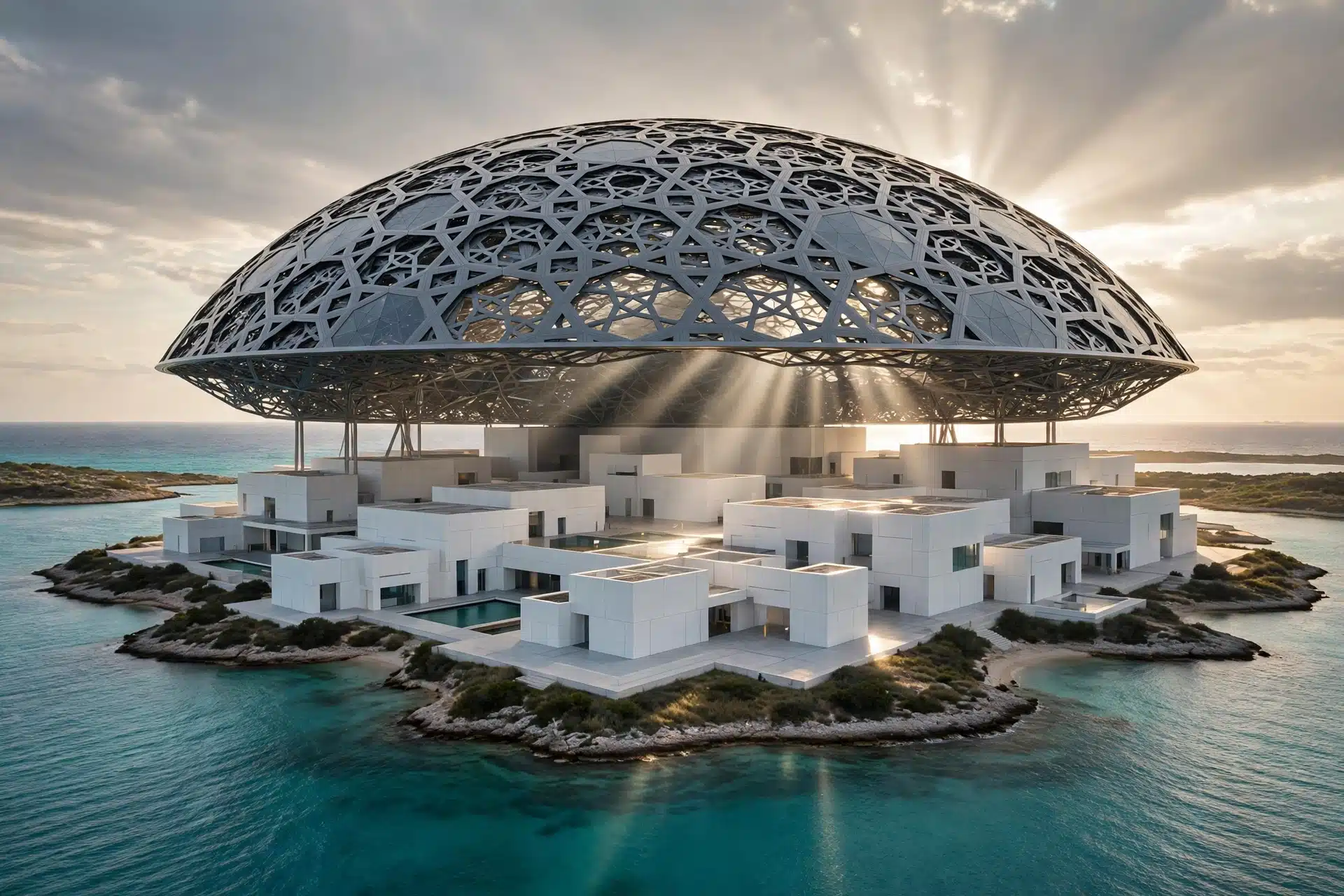
A museum that is itself a work of art. Jean Nouvel’s Louvre Abu Dhabi sits on Saadiyat Island under a vast floating dome, and as the sun moves, light filters through the dome’s layered geometry to create the famous “rain of light” effect across the white gallery buildings below.
Inside, the collection deliberately places civilisations side by side — ancient artefacts, classical paintings and contemporary works sharing rooms to tell one human story. Even travellers who “don’t do museums” tend to linger here; the kayaks that paddle around the museum’s waters at golden hour have become a beloved Abu Dhabi ritual in their own right.
4. Dubai Creek & Al Fahidi Historical District — Old Dubai
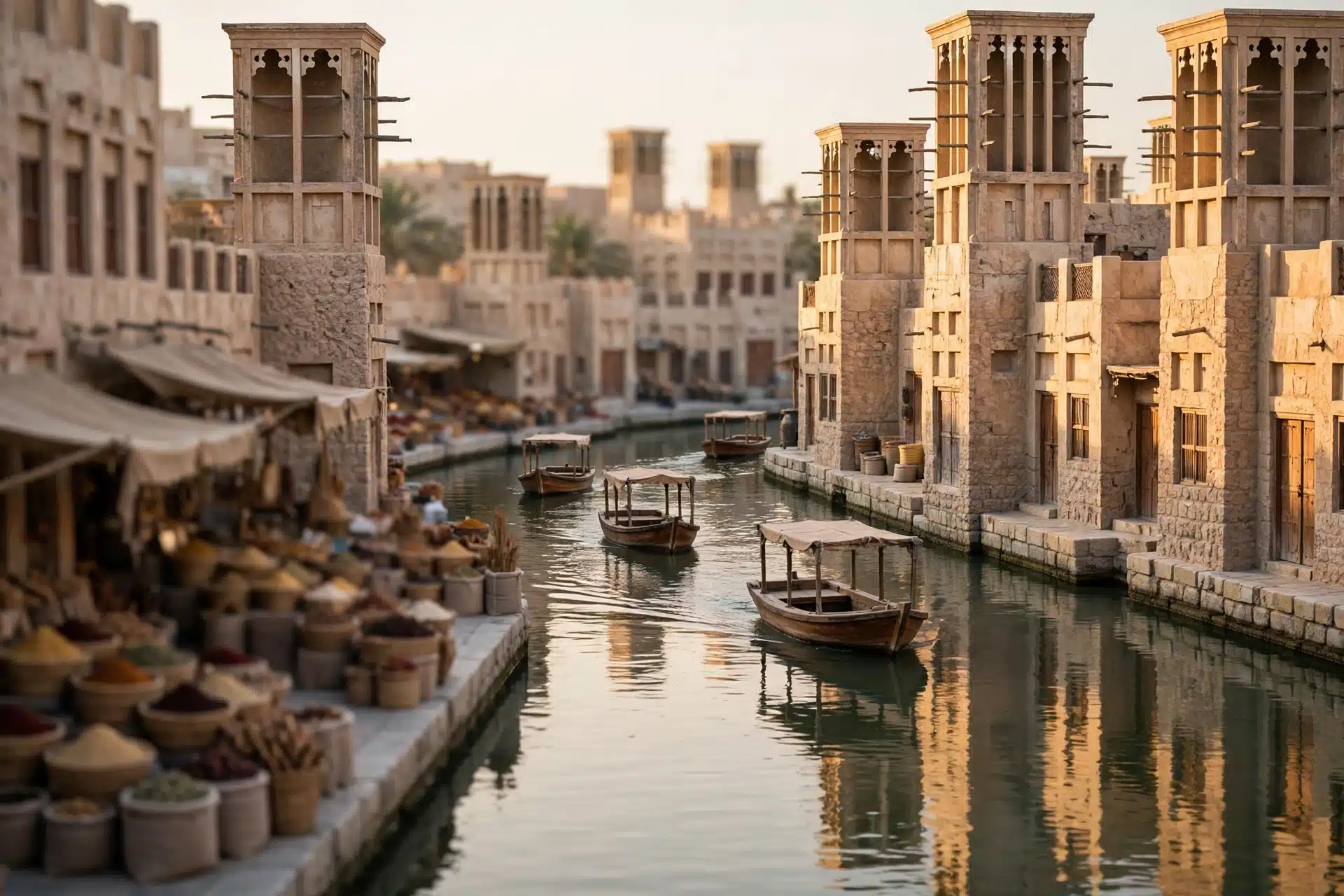
Before the towers, there was the Creek. The Al Fahidi district on its Bur Dubai bank is old Dubai preserved: coral-stone houses with wind towers, narrow lanes, small museums and galleries, and the smell of cardamom drifting over from the souks.
The essential ritual is crossing the water on a wooden abra — the little boats have ferried passengers between Bur Dubai and Deira for generations for a single dirham. On the Deira side, dive into the gold and spice souks, then come back for a slow afternoon in the lanes of Al Fahidi. This is the Dubai that gives the modern city its meaning, and no itinerary is complete without it.
5. Palm Jumeirah — Dubai
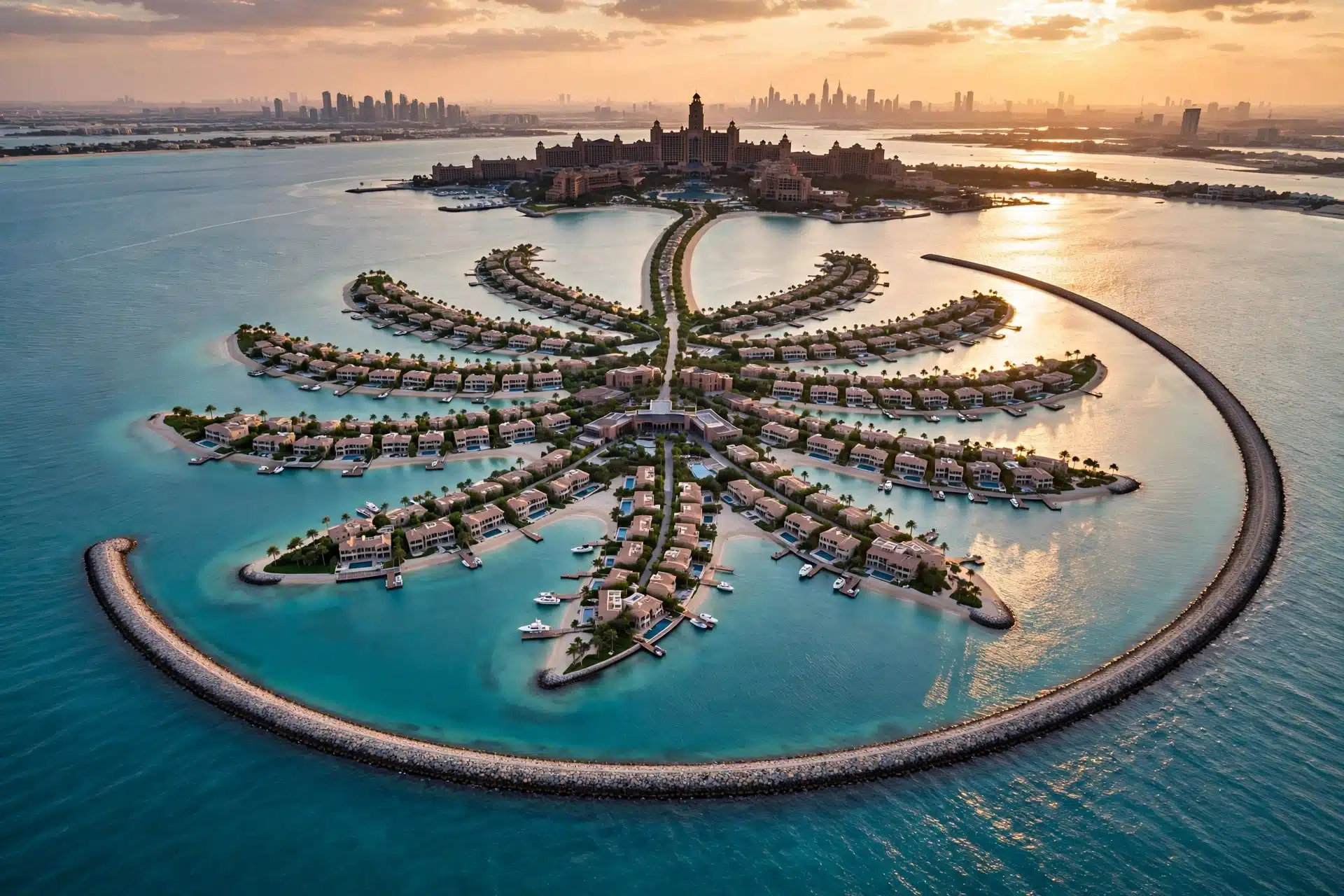
Whatever you think of it, there is nothing else like it: a palm-tree-shaped island built from reclaimed land, visible from space and crowned by some of the most famous resort hotels on the planet. Even if you’re not staying on it, the Palm earns its place on this list as a feat of sheer audacity.
Ride the monorail along the trunk for the classic view back towards the skyline, walk the Crescent’s boardwalk at sunset, or simply drive it and marvel. The Pointe and Palm West Crescent are made for golden-hour strolls, with the Atlantis silhouette at one end and the Dubai Marina skyline glittering at the other.
6. Hatta — Hajar Mountains, Dubai exclave
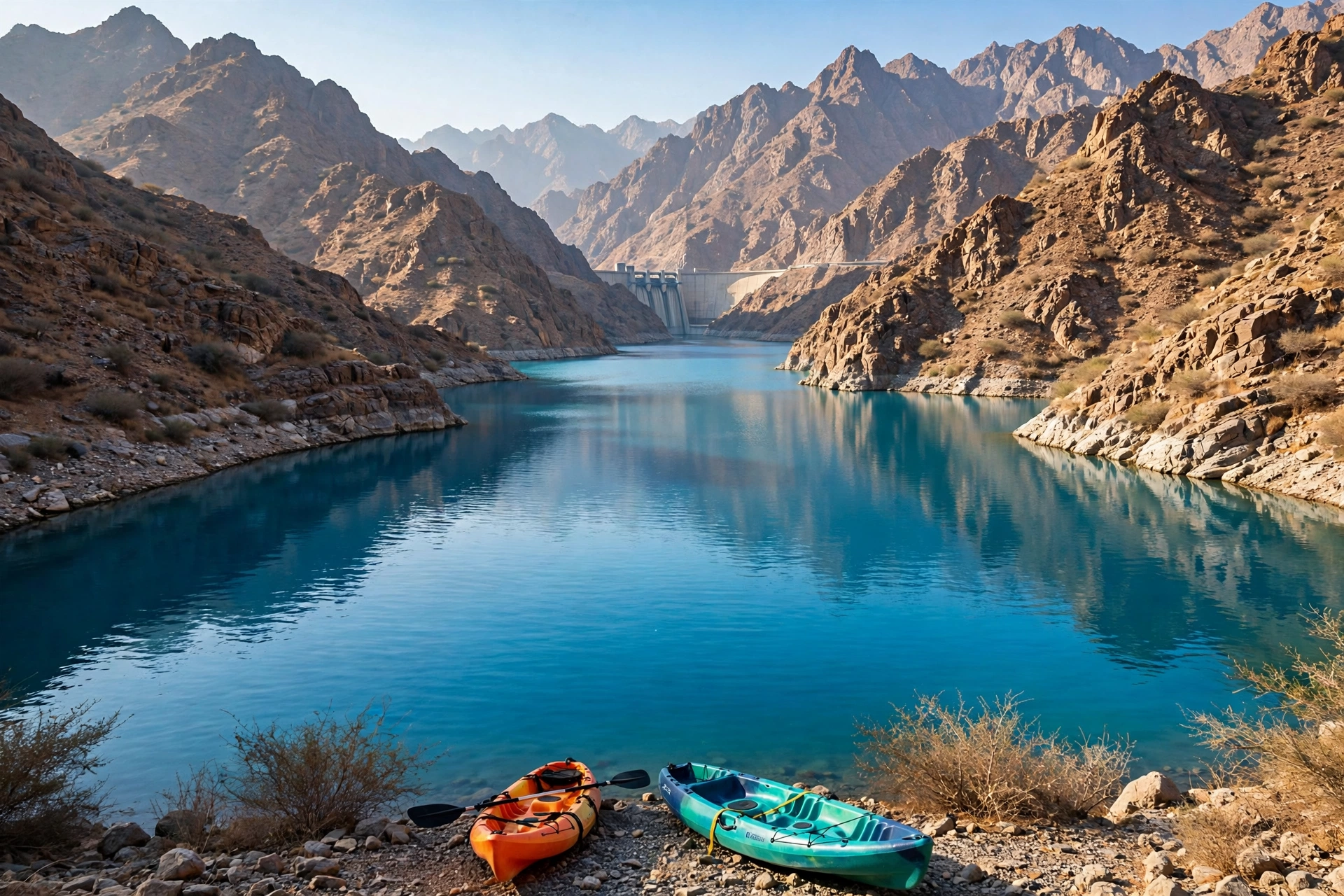
Ninety minutes from the city, the landscape changes completely. Hatta — an exclave of Dubai tucked into the Hajar Mountains on the Omani border — is where Dubai residents escape when the coast heats up: rugged peaks, heritage lanes and a famous turquoise dam made for kayaking.
Rent a kayak or paddle boat on Hatta Dam, wander the restored Heritage Village, and head to Hatta Wadi Hub if you want mountain biking, hiking trails and outdoor adventure activities. Visit in the cooler months (roughly October to April) and the mountains are genuinely pleasant — a side of the UAE most tourists never see.
7. Jebel Jais — Ras Al Khaimah
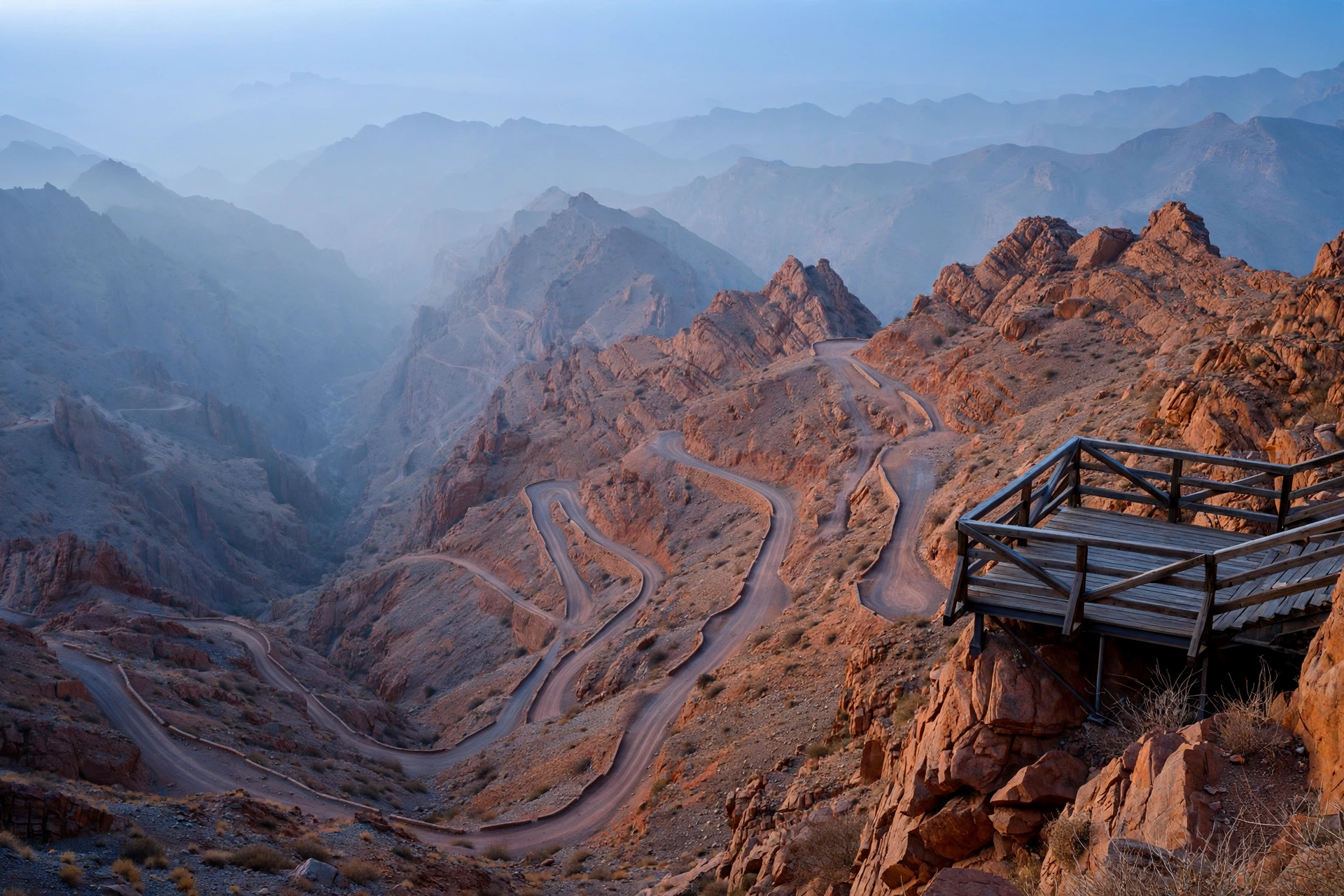
The UAE’s highest peak, at 1,934 metres, and the country’s great mountain road trip. The drive up Jebel Jais winds through bare, folded rock to a string of viewpoints — and in winter, temperatures at the top can drop close to freezing while the coast basks an hour below.
The headline act is the Jebel Jais Flight, marketed as the world’s longest zipline, sending riders soaring above the canyon floor. If that’s a thrill too far, the viewing decks, hiking trails and simple picnic-with-a-view stops make the trip worthwhile on their own. Go early on winter weekends; half of the Emirates has the same idea.
8. Heart of Sharjah & the Museum of Islamic Civilization — Sharjah
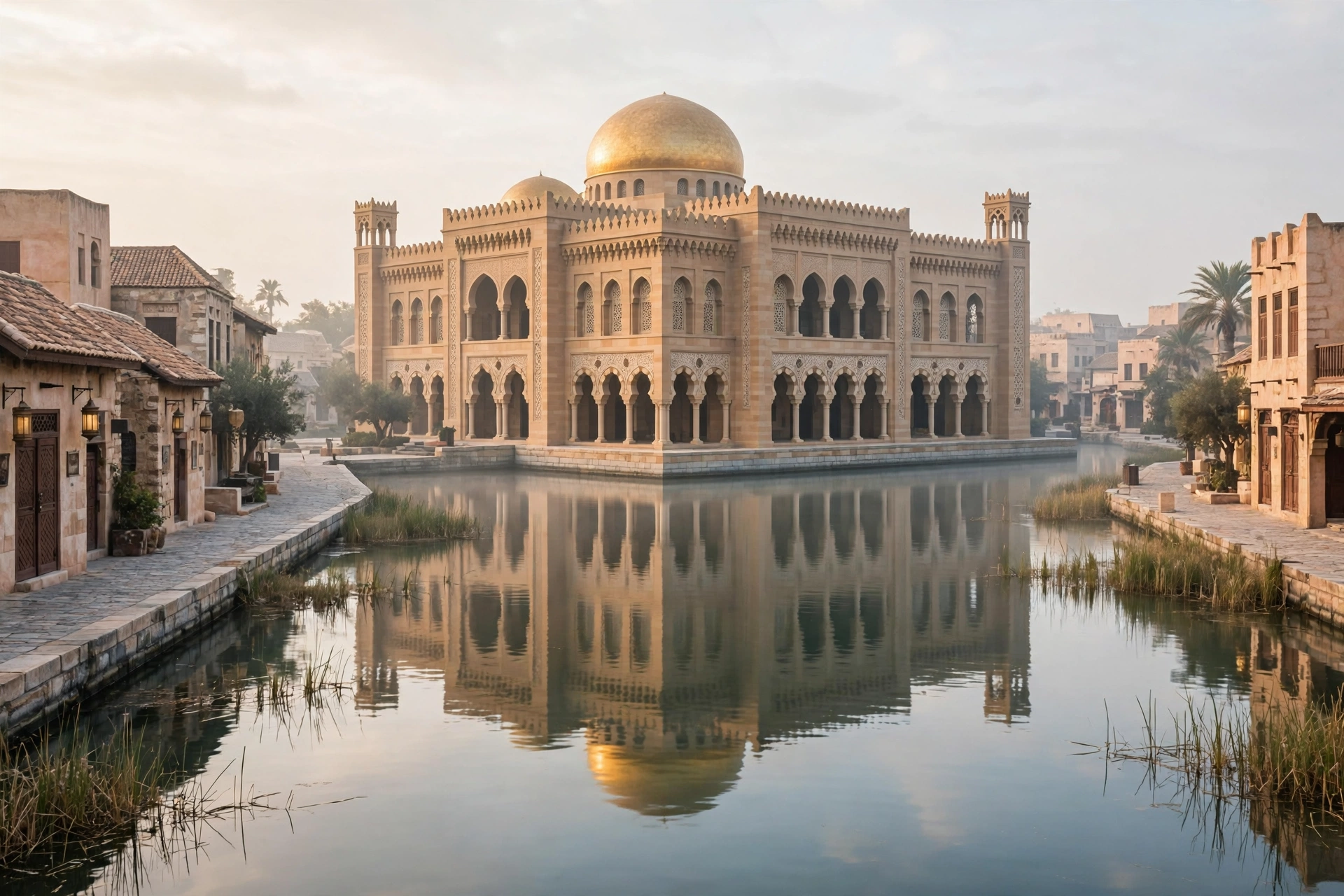
Sharjah — the UAE’s cultural capital — is the counterweight to Dubai’s glitz, and it’s only about half an hour away. The Museum of Islamic Civilization, housed in a landmark domed building on the Corniche, galleries thousands of artefacts spanning fourteen centuries of Islamic science, art and craftsmanship (the astronomy and coin collections are quietly superb).
Around it, the Heart of Sharjah restoration area rebuilds the old city’s coral-stone lanes, souks and courtyard houses. Come for the museums, stay for the calmer pace — and note that Sharjah is a dry emirate, so evenings here are about coffee houses, art spaces and the calligraphy-adorned waterfront.
9. Fujairah & Al Bidya Mosque — the East Coast
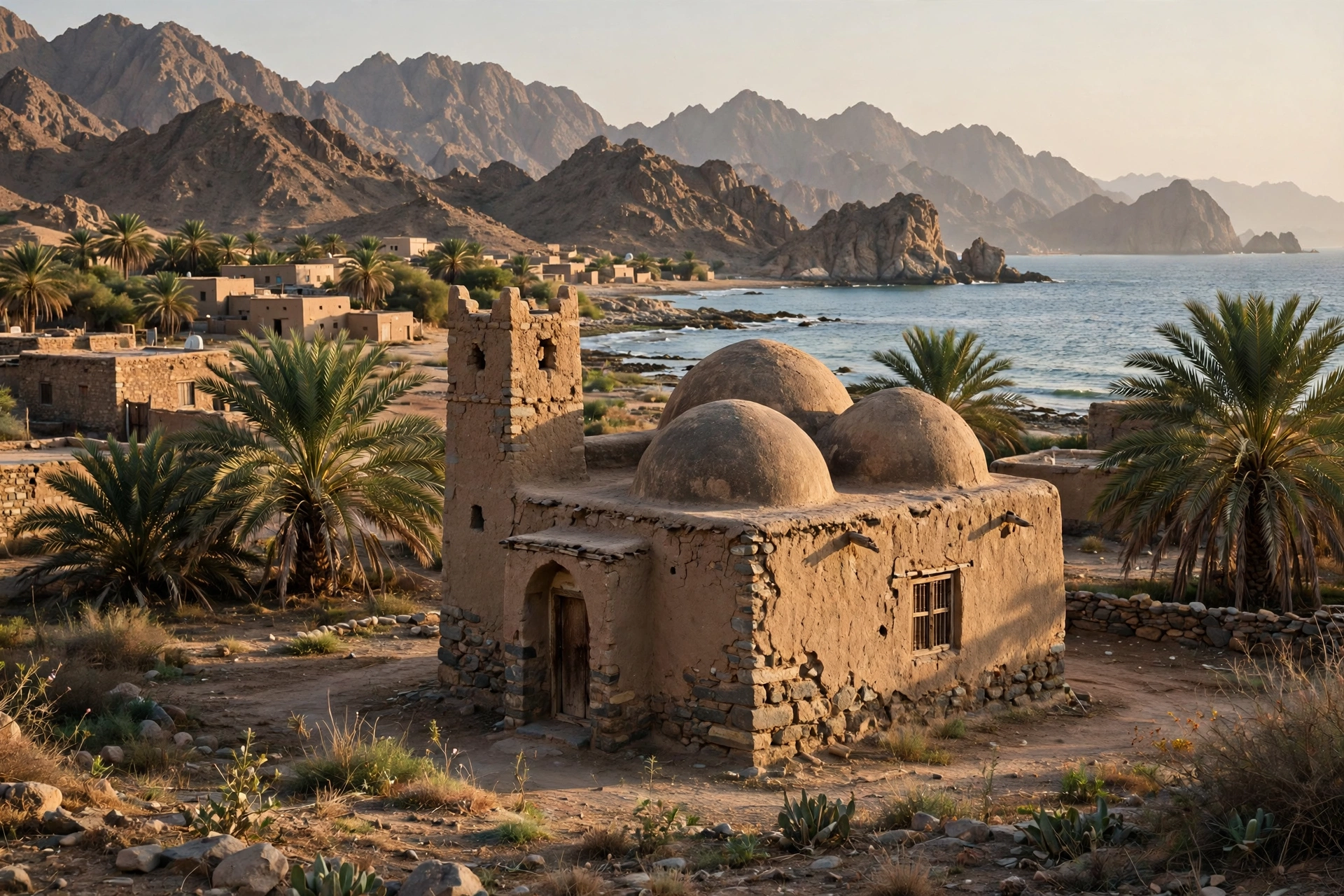
The UAE’s other coastline faces the Gulf of Oman, and it feels like a different country: mountains running down to quieter beaches, and a slower, older rhythm. The star is Al Bidya Mosque, a small mud-and-stone mosque that is the oldest in the UAE — its exact age is debated, but it has stood for centuries and remains in use.
Base yourself around Fujairah city or the Al Aqah beach strip, visit the restored Fujairah Fort, and don’t miss snorkelling around Snoopy Island, where reef fish, turtles and (if you’re lucky) blacktip reef sharks cruise the rocks just off the beach. Weekday mornings, before the boats arrive, are the local secret.
10. Al Ain Oasis — Al Ain, Abu Dhabi Emirate
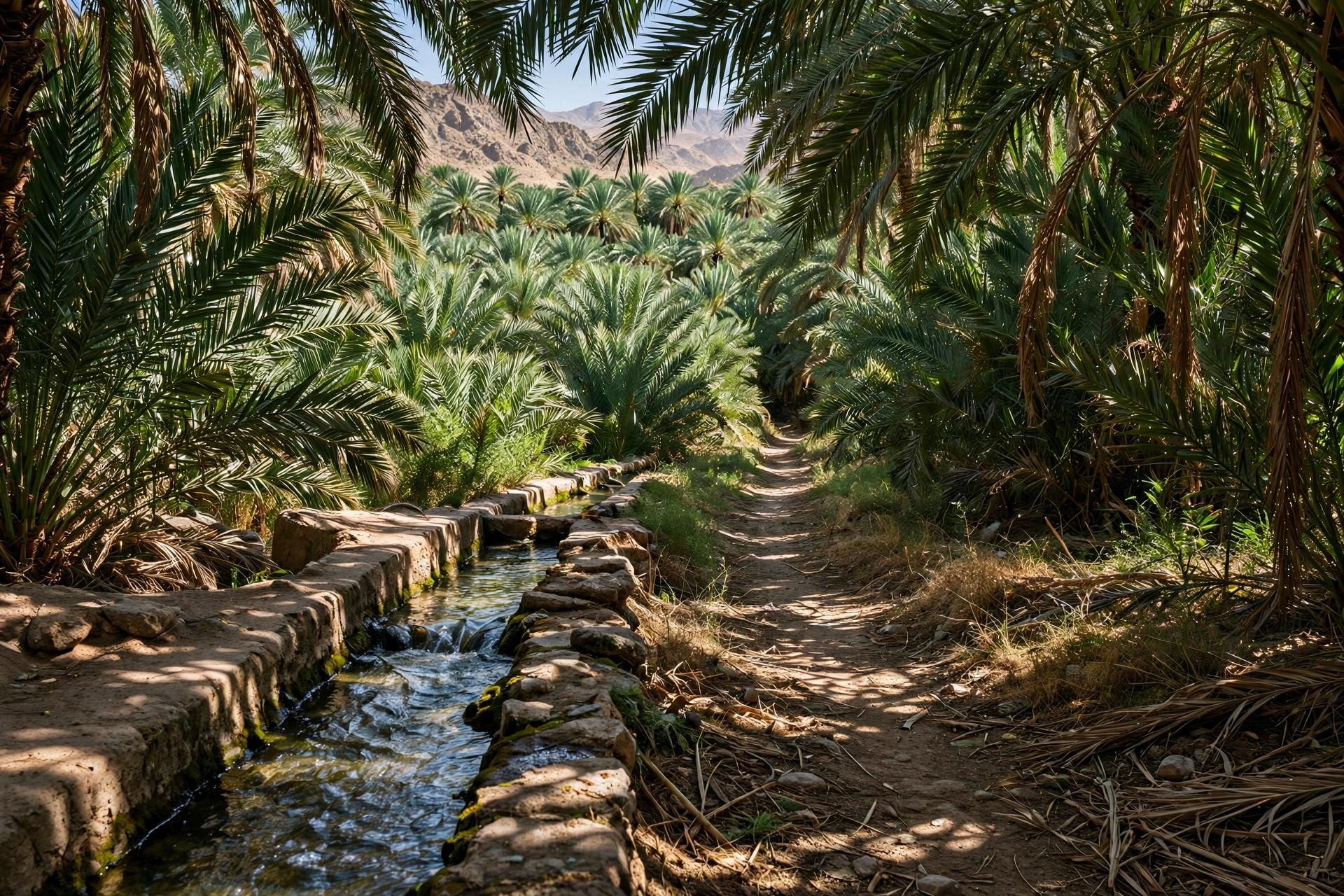
The “Garden City” of Al Ain, about 90 minutes inland from Dubai, is the UAE’s green soul — and its oasis is a UNESCO World Heritage site: some 147,000 date palms shading cool, quiet pathways through a working falaj irrigation system that has watered this grove for thousands of years.
Walk or cycle the shaded lanes in the morning, visit the small eco-centre to understand how the falaj channels work, and combine it with the drive up Jebel Hafeet — Al Ain’s own mountain, with a winding road and sunset views across the desert. It is the gentlest stop on this list, and after the cities, that is exactly its charm.
Frequently Asked Questions
What is the number one place to visit in the UAE?
For a first-timer, it’s a tie between two icons: the Burj Khalifa for the view and the sheer engineering, and the Sheikh Zayed Grand Mosque for beauty and meaning. If you only have one day, do the mosque in Abu Dhabi’s golden hour and the Burj at sunset on another.
What is the best time to visit the UAE?
The cooler months, roughly November to March, when daytime temperatures sit around 20–30°C and outdoor exploring is a pleasure. October and April are pleasant shoulder months. In summer (June to September), temperatures can pass 40°C — plan around indoor attractions and early mornings.
How many days do you need in the UAE?
Five to seven days lets you do Dubai and Abu Dhabi properly and add one escape — Hatta or Jebel Jais for mountains, or Fujairah for the east coast. With ten days, add Sharjah and Al Ain at an easy pace.
Is the UAE only about luxury and shopping?
Not at all. Old Dubai’s Creek and Al Fahidi district, Sharjah’s museums, Al Ain’s ancient oasis and the Hajar Mountain landscapes around Hatta and Fujairah show a heritage and natural side that long predates the skyscrapers.
Planning a UAE getaway, event or brand trip and want to reach travellers who plan their weekends around lists like this one? Visit our Advertise With Us page — we’d love to talk.
Hungry for more? Follow Sizzling Magazine on Facebook for daily food finds, travel guides and lifestyle stories from Dubai and beyond.
Editorial note & disclaimer: This list is an editorial feature prepared by the Sizzling Magazine team. The selections and ranking reflect our own editorial judgment, based on our research and on publicly available reviews and ratings at the time of writing — inclusion is not an endorsement, and no business paid or provided goods or services to be listed. Attraction details, including entry fees, prices and opening hours, change over time; please check with the venue before visiting. All attraction names and trademarks belong to their respective owners and are used for editorial identification only. Photographs and images accompanying this article are illustrative and may not depict the actual venues named.

Akif is the founder and editor of Sizzling Magazine, a women’s lifestyle magazine covering beauty, fashion, travel, food, and wellness. Publishing since 2012, he curates practical skincare routines, honest beauty advice, and wearable fashion trends for real women — with a soft spot for old-school home remedies that actually work. Sizzling Magazine is where grandma’s beauty wisdom meets modern trends.



Leave a Reply