

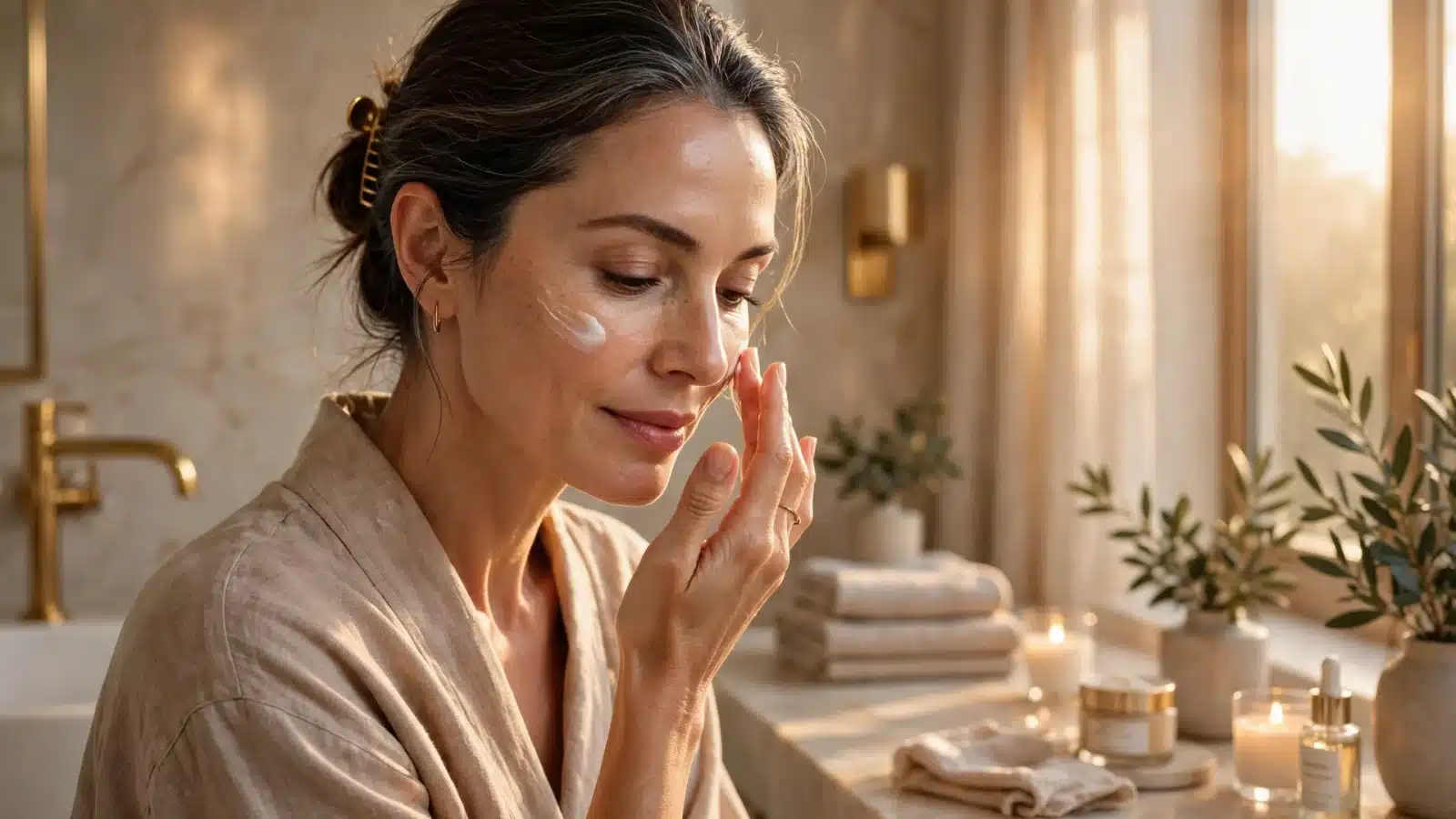
Here is the truth nobody tells you at 39: the routine that carried you through your 30s quietly stops working in your 40s. Skin gets drier, fine lines linger longer, and that glow takes more coaxing. The good news is that you do not need a 12 step routine or a celebrity budget. You need the right steps, in the right order, done consistently.
The short answer: the best skincare routine for women over 40 is a gentle cleanse, a moisturizer matched to your skin, and broad spectrum SPF 30 or higher every morning; at night, cleansing, a retinoid used slowly and safely if your skin tolerates it, and a richer moisturizer. Everything else, including vitamin C and peptides, is a supporting extra, not a requirement.
What Actually Changes After 40
As estrogen falls through perimenopause and menopause, skin loses collagen faster. The American Academy of Dermatology notes that studies show women’s skin loses about 30% of its collagen during the first five years of menopause, and about 2% a year after that. Skin also makes less natural oil, cell turnover slows so dullness builds up, and the barrier weakens, so moisture escapes faster and products that never bothered you can suddenly irritate. In plain terms, skin over 40 needs more moisture, gentler handling, and daily sun protection above all. If you are weighing up how much the morning and night routines each matter, our guide to morning vs night skincare routine breaks that down.

The Morning Routine (Protect)
Step 1: Gentle cleanse, or just water
A splash of lukewarm water is enough for most skin in the morning. If you cleanse, choose a creamy, non-foaming cleanser that never leaves skin feeling squeaky or tight.
Step 2: Vitamin C serum (optional, helpful)
Vitamin C is an antioxidant. It plays a role in collagen production and helps limit the free radical damage that UV light causes in skin, which is why it sits in the morning routine. Two honest limits: the research on topical vitamin C is still developing, and vitamin C is not a sunscreen; it does not absorb UVA or UVB light, so it never replaces SPF. The Linus Pauling Institute’s review of vitamin C and skin health sets out what is and is not established. If you use it, pat a few drops onto dry skin and let it sink in before moisturizer.
Step 3: Moisturizer
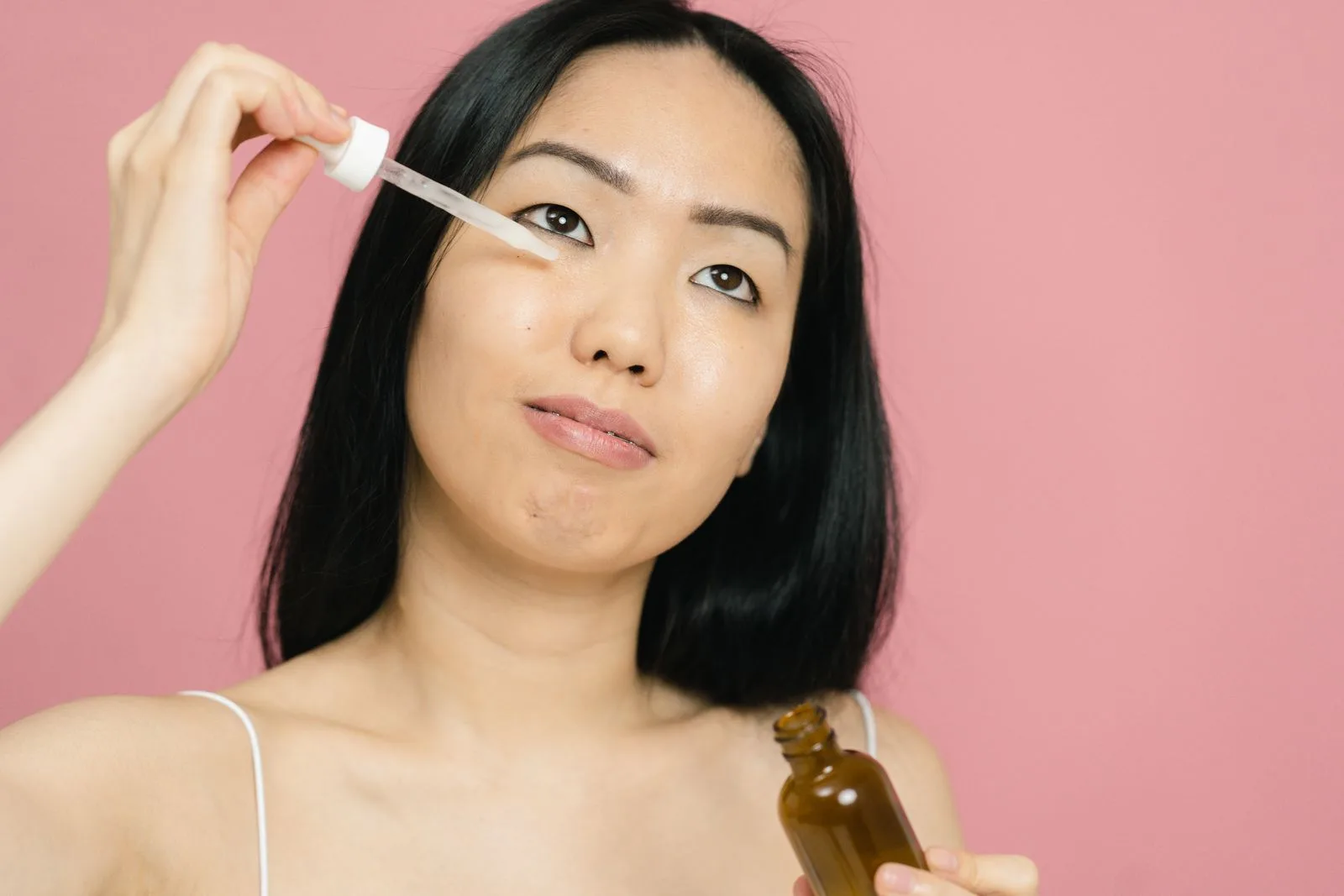
Look for ceramides, glycerin or hyaluronic acid on the label. Apply on slightly damp skin to help hold water in. Ceramides support the skin barrier; glycerin and hyaluronic acid are humectants that draw water into the upper layers of skin.
Step 4: SPF 30 or higher, every morning
This is the step dermatologists consistently put first. Daily broad spectrum sunscreen with SPF 30 or higher is the most reliable anti-aging step in this entire guide, because so much visible skin aging comes from UV exposure. Apply it every morning, including cloudy days, and reapply every two hours when you are outdoors, as the American Academy of Dermatology’s sunscreen guidance sets out. Do not rely on foundation alone for that protection: foundation is almost always applied too thinly and unevenly to deliver its labeled SPF, so sunscreen goes on first, in its own proper amount.
The Evening Routine (Repair)
Step 1: Cleanse properly
Remove the day with a gentle cream cleanser. If you wear makeup or sunscreen, take a full 60 seconds; most people rush this step and leave residue behind.

Step 2: Retinoid night (start slow, and read the safety notes)
Retinoids are among the best studied skincare ingredients. The American Academy of Dermatology describes retinoid products as a good option for mild fine lines and wrinkles and mild pigmentation irregularities. Start with a pea sized amount for the whole face, two or three nights a week, and build up only as your skin tolerates it. Mild dryness and flaking at first are common; applying moisturizer before and after (the sandwich method) helps. Use at night only, and skip strong exfoliants on retinoid nights.
Safety notes that matter:
- Do not use retinoids during pregnancy. The American Academy of Dermatology states that retinoids should not be used during pregnancy. If you are pregnant, trying to conceive, or unsure, skip this step and ask a dermatologist what is suitable.
- Irritation is information. Persistent burning, swelling or rash means stop and scale back. The AAD also cautions that on darker skin, irritation can trigger dark marks, which is another reason to start slowly and keep moisturizer up.
- Retinoids are not for everyone. If you have eczema, rosacea or very reactive skin, talk to a dermatologist before starting one.
Step 3: Peptide serum or cream (optional)
Peptides are widely used in firming products and are generally gentle and well tolerated, which makes them easy to use on non-retinoid nights. Be clear eyed, though: the clinical evidence behind cosmetic peptides is thinner than the evidence for retinoids and sunscreen, so treat this step as a pleasant extra, not a proven treatment.
Step 4: Rich night moisturizer
Finish with a richer cream than your daytime one. In winter, a drop of facial oil or a thin layer of plain balm over dry areas helps seal moisture in overnight. A weekly DIY face mask for glowing skin can sit in this slot as a treat, not a treatment.
Using Exfoliating Acids Safely
Gentle chemical exfoliation with an alpha hydroxy acid (such as glycolic or lactic acid) once or twice a week can smooth roughness and dullness, and it is usually kinder to mature skin than grainy scrubs. One caution is essential: the US Food and Drug Administration warns that AHAs can increase your skin’s sensitivity to the sun and the possibility of sunburn, and advises daily sun protection while using them and for a week afterwards. The FDA’s alpha hydroxy acids page has the full safety detail. Start once a week, never on the same night as a retinoid, and stop if you get burning or a rash. Trends like skin cycling, covered in our look at Korean skincare trends, are built on this same principle: active nights and rest nights, never everything at once.
The Ingredients That Earn Their Place
- SPF 30+ (broad spectrum): protects against further UV damage, the main driver of visible aging. Every morning.
- Retinoid (retinol or retinal): best studied option for mild fine lines, texture and uneven tone. Night only, start two to three times a week. Not during pregnancy.
- Vitamin C: antioxidant that supports collagen and helps limit UV related free radical damage. Morning. Helpful, not essential, and never a substitute for sunscreen.
- Ceramides: support the moisture barrier and help reduce dryness and sensitivity. Any time.
- Hyaluronic acid and glycerin: humectants that draw water into the skin for a plumper feel. Any time, best on damp skin.
- Peptides: gentle and well tolerated; evidence is limited. Optional, morning or night.
Common Mistakes That Slow Your Results
- Using too many actives at once. Vitamin C, a retinoid, strong acids and scrubs together is a recipe for an irritated barrier. Add one new product every two to three weeks.
- Skipping SPF because the foundation has some. It is not enough, for the reason given above.
- Aggressive scrubbing. Grainy scrubs and harsh brushes can damage delicate skin. A gentle chemical exfoliant once or twice a week is plenty, with the sun sensitivity caution above.
- Giving up at week two. Retinoids work over months, not days. Judge a new routine at 8 to 12 weeks at the earliest.
- Forgetting the neck and hands. They age just as fast. Extend every product, especially sunscreen, downward.
The Budget-Friendly Way to Build This Routine
You do not need luxury brands. Spend in this order: a sunscreen you will actually wear daily, then a retinoid, then vitamin C if you want it. Drugstore cleansers and moisturizers are often excellent; glycerin and ceramides are inexpensive, well understood ingredients. One well chosen product per step beats a shelf of half used jars. And when you are ready to put makeup over the top, our guide to the best makeup for mature skin shows which formulas sit well on skin cared for this way.
Frequently Asked Questions
At 40+, how many products do I really need?
Four to five: a cleanser, a moisturizer, SPF 30+ for the morning, and a retinoid at night if your skin tolerates it and you are not pregnant. Vitamin C and peptides are optional extras.
I am new to retinol. Will it irritate my skin?
It can at first. Start twice a week with a pea sized amount, moisturize before and after, and increase slowly. The American Academy of Dermatology’s guide to retinoid or retinol explains the options. Persistent burning or a rash means scale back, and if irritation continues, see a dermatologist. Do not use retinoids during pregnancy.
How long until I see a difference?
Hydration improves within days. Texture and fine lines take longer: give a routine at least 8 to 12 weeks, and retinoid results build over months. A monthly photo in natural light makes progress easier to see.
Do I still need SPF on cloudy days or indoors?
On cloudy days, yes: UVA rays, the ones most linked to skin aging, pass through clouds. Indoors, it depends on your daylight exposure. UVA also passes through window glass, so daily SPF is particularly worthwhile if you sit near a window or get a lot of daylight through glass during the day. If you spend most of the day in a room with little natural light, the need is much lower.
Can I use an exfoliating acid and a retinoid together?
Not on the same night, especially when you are starting out. Alternate nights, keep the acid to once or twice a week, and remember that acids increase sun sensitivity, so daytime sunscreen is non-negotiable.
Love practical beauty that actually works? Follow Sizzling Magazine on Facebook for daily skincare tips, natural beauty tricks, and routines in under a minute.
This article is general information about cosmetic skincare, not medical advice. It does not diagnose or treat any skin condition. Stop using any product that causes persistent irritation, and see a dermatologist about ongoing skin concerns, new or changing spots, or before starting active ingredients if you are pregnant, have a diagnosed skin condition, or take medication that affects your skin.
Morning vs night: what actually matters most
The merged guide adds a few points worth keeping. In the morning, skin needs protection not only from UV but also from pollution, dust, blue light, and sweat and oil, so sunscreen remains the most important morning step. At night, repair takes over because cell turnover increases while you sleep, which is why dermatologists usually give the night routine the edge. Night is also the time for double cleansing, first with an oil based cleanser and then with a water based one, followed by a night cream or a sleeping mask as the final step. And never sleep with makeup on, since that clogs pores and can cause breakouts. Morning and night matter in different ways, and a routine you follow every day matters more than expensive products.

Akif is the founder and editor of Sizzling Magazine, a women’s lifestyle magazine covering beauty, fashion, travel, food, and wellness. Publishing since 2012, he curates practical skincare routines, honest beauty advice, and wearable fashion trends for real women — with a soft spot for old-school home remedies that actually work. Sizzling Magazine is where grandma’s beauty wisdom meets modern trends.




Leave a Reply