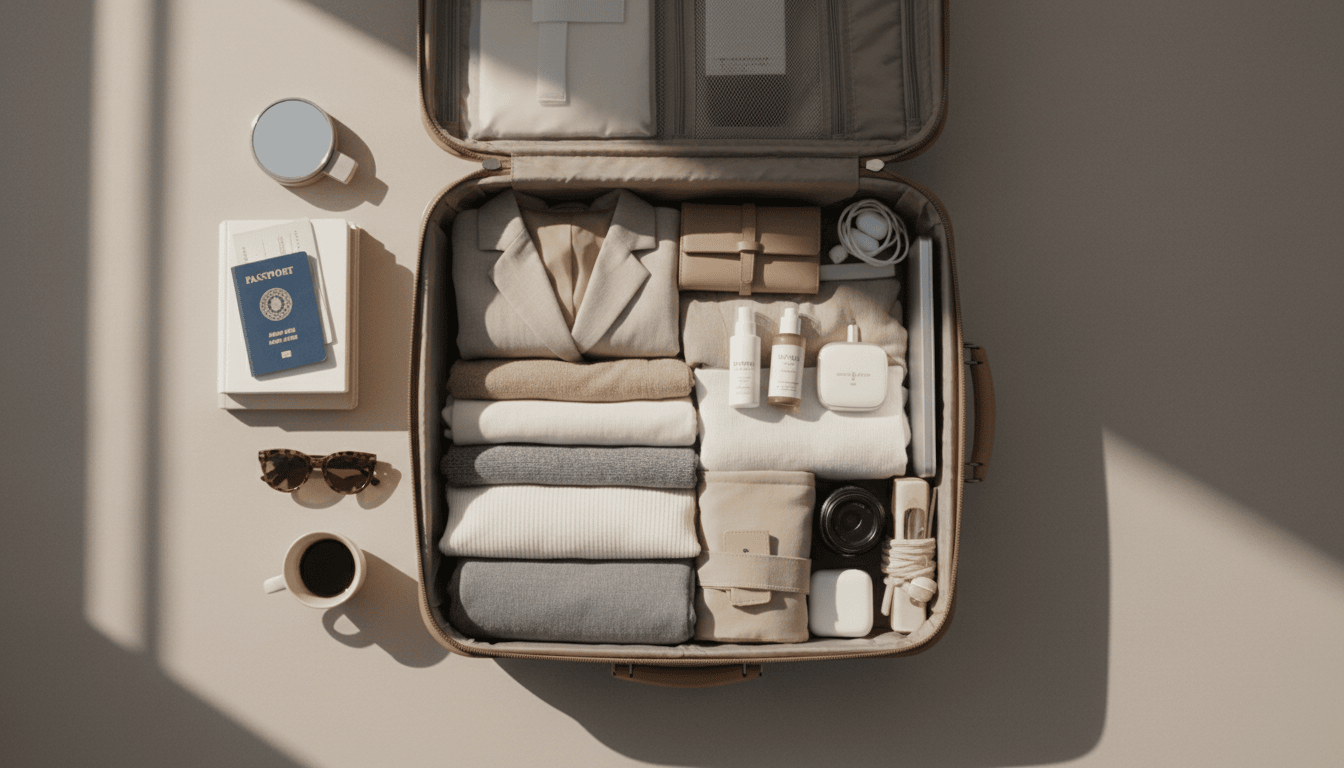
Women now make up 84% of all solo travelers worldwide — and yet the number one thing holding most women back from booking that trip is not fear of the destination. It is the paralyzing question of what to pack. This list answers that question once and for all.
Here is the honest truth that took most experienced solo female travelers years to learn: you will overpack your first trip. Almost everyone does. You pack for every possible scenario, every weather change, every formal dinner that never happens. You arrive with a suitcase that weighs more than you do, and you drag it through cobblestone streets wondering why you brought three pairs of heels to Lisbon.
This guide is the list you wish someone had handed you before your very first solo trip. It is built on what actually matters in 2026 — when eSIMs replace SIM swapping, when safety gear has become non-negotiable, and when the carry-on-only movement has proven, beyond doubt, that you genuinely need less than you think.
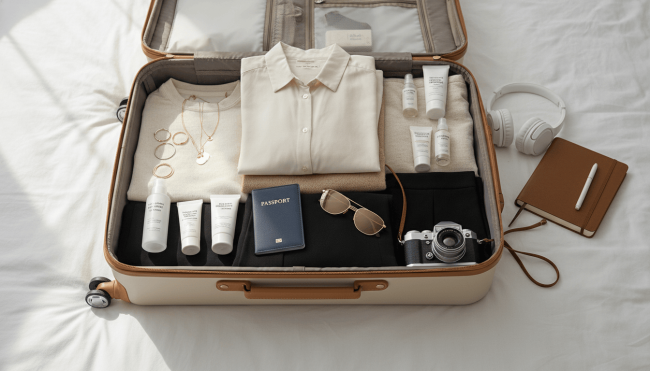
The golden rule before you start: pack half of what you think you need
Before you open a single drawer, accept this principle: write down everything you think you need, then cut the list in half. This is not minimalism for its own sake. It is pragmatism. As a solo traveler, you are responsible for carrying, tracking, and keeping safe every item you bring. Every extra kilogram is extra cognitive load. Every bag you cannot lift into an overhead locker means asking a stranger for help. Every lock you need to juggle at security is thirty seconds of vulnerability.
The modern solo female traveler’s goal is a single carry-on bag and a day pack. Everything on this list fits inside that. If yours does not, something comes out — not something gets added.
The solo female travel safety kit — non-negotiables that go in first
A February 2026 Talker Research survey confirmed that 59% of women say walking alone at night is their biggest travel fear. The right gear does not eliminate that fear — but it does give you concrete, practical tools to manage it. These items go into your bag before anything else.
Document and money security
- Money belt or hidden pouch — worn under your clothing, not clipped to the outside of your bag. Keeps your passport, emergency cash, and backup card invisible and unreachable in crowded areas, on public transport, and at busy tourist sites.
- Two bank cards from different providers, stored separately — one in your money belt, one locked in your bag. If one is lost, stolen, or swallowed by a foreign ATM, you are never completely without funds.
- Printed and digital copies of all documents — passport photo page, travel insurance certificate, accommodation confirmations, and emergency contacts. Store digitally in Google Drive or Dropbox. Email a copy to a trusted person at home. Paper copies travel in your money belt, originals travel in your day pack.
- Small padlock — for hostel lockers and bag zips in transit. TSA-approved if flying into the United States. Costs almost nothing, provides significant peace of mind.
Personal safety devices
- Personal safety alarm — a keychain alarm that emits 120dB when activated. Weighs under 50 grams. Can be carried in hand on late-night walks and packed in your carry-on. This is non-negotiable on every serious solo female packing list in 2026.
- Doorstop alarm — a wedge that slides under your hotel or hostel room door and emits an alarm if the door is pushed open. Particularly valuable in budget accommodation or anywhere you feel uncertain about room security. Used by experienced solo travelers who stay in a wide range of accommodation types.
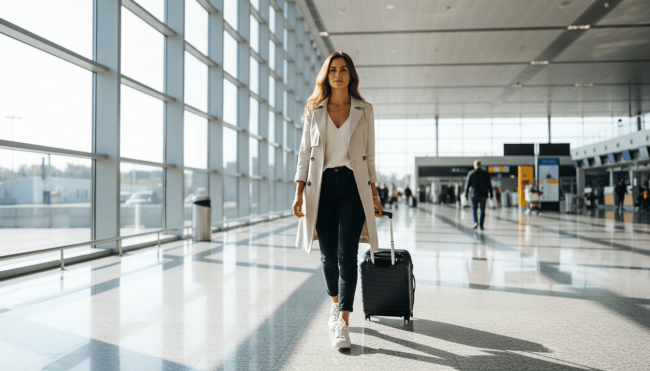
Clothing: the carry-on-friendly capsule wardrobe for female solo travelers
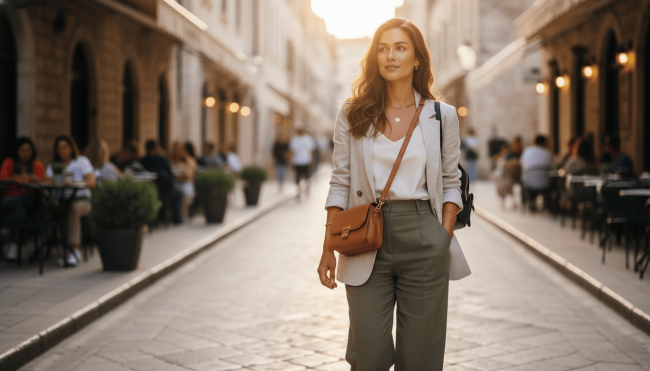
The key principle for solo travel clothing is versatility over volume. Every piece should work with at least two other pieces. No single-use items. No “just in case” outfits that stay in the bag for three weeks.
- 3–4 tops — mix of t-shirts and one slightly dressier blouse. Choose lightweight, breathable fabrics. Merino wool is the gold standard: it regulates temperature, resists odours between washes, and dries overnight. One merino t-shirt can carry you through four days of wear before it needs washing.
- 2 bottoms — one pair of versatile trousers (lightweight, not jeans — denim takes too long to dry and adds unnecessary weight), one dress or skirt that works for both daytime sightseeing and an evening out. A wrap dress is ideal: adjustable fit, packs flat, looks intentional.
- 1 lightweight jacket or cardigan — worn in transit, used as a blanket on night flights, and layered when temperatures drop unexpectedly. This is your most versatile piece.
- 1 scarf or wrap — covers shoulders for temple or mosque visits, doubles as a blanket, provides sun protection, and adds variety to the same outfit. Essential for travel in South Asia, the Middle East, and Southeast Asia where modest dress is expected or respectful.
- 2 pairs of shoes maximum — comfortable walking shoes for the day, one pair of sandals or flat shoes for evenings. Shoes are the heaviest and bulkiest items you pack. Two is the absolute ceiling. Wear the heavier pair in transit.
- 7 days of underwear — quick-dry fabrics only. Plan to hand wash and let dry overnight rather than packing for the full trip duration. Merino wool underwear is genuinely worth the investment for longer trips.
- 1 sports bra — for active days, hiking, or when you need something more secure than your regular one.
Tech and connectivity — the 2026 solo traveler’s digital toolkit
The biggest shift in solo female travel packing between 2020 and 2026 is in the tech category. These items were either unavailable or unnecessary five years ago. In 2026, they are foundational.
- eSIM card — download before you leave home. Airalo and Holafly both offer affordable data plans for 190+ countries. Eliminates the need to find a SIM vendor on arrival, queue at airport kiosks, or worry about your phone being unlocked. You land, your phone connects, you navigate immediately.
- Portable power bank (20,000mAh minimum) — your phone is your map, your translator, your emergency contact, and your safety lifeline. Running out of battery on a solo trip is a genuine safety risk. A 20,000mAh bank charges your phone three to four times.
- Universal travel adapter — not a regional adapter for one country. A universal one covers every destination you will ever visit and costs only marginally more. Buy once, use forever.
- Offline maps downloaded before departure — Google Maps allows full offline downloads. Download your destination city before you board. Navigation without data is a fundamental safety skill for solo travel.
- Google Translate with offline language packs downloaded — point your camera at a sign, menu, or notice in any language and get an instant translation. Download the language packs for your destinations before you leave home, so it works without data.
- Backup earbuds — not your most expensive pair. If they are stolen or lost, it should be a minor inconvenience rather than a significant loss. Also: do not wear both earbuds simultaneously in unfamiliar areas — keep one ear available for your surroundings.
Toiletries and health essentials — what to bring vs what to buy there
The rule is simple: bring only what you cannot reliably find at your destination, and bring it in travel size. Everything else — shampoo, conditioner, body wash, sunscreen — can be purchased on arrival in most countries, often more cheaply than at home.
- Solid toiletries where possible — solid shampoo bars, conditioner bars, and toothpaste tablets pack in a fraction of the space, weigh almost nothing, and bypass all liquid restrictions in carry-on bags. A single shampoo bar lasts as long as two full bottles of liquid shampoo.
- Travel-sized liquid toiletries in a clear bag — for anything not available in solid form. Must be under 100ml per item, all in a single transparent 1-litre bag for carry-on compliance.
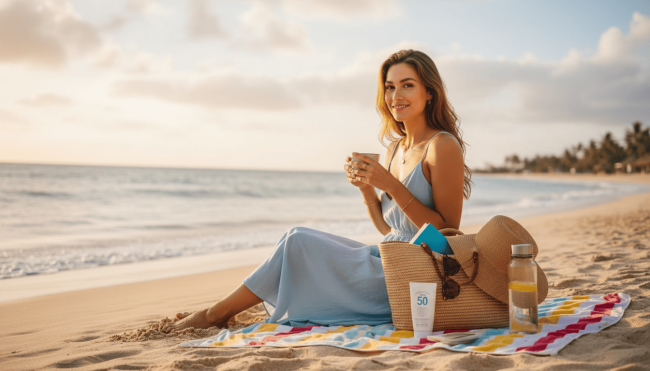
- High-SPF sunscreen — bring from home — the one exception to the “buy it there” rule. Quality sunscreen is expensive and difficult to find in the right formulation in many countries. Bring enough for your trip.
- Basic first aid kit — plasters, ibuprofen or paracetamol, antihistamine, rehydration salts, anti-diarrhoea tablets, and any prescription medication with a printed copy of your prescription. A small ziplock bag is all you need. Compact, essential, and rarely used — but you will be genuinely grateful when you do need it.
- Menstrual cup or period underwear — experienced solo female travelers overwhelmingly recommend a menstrual cup over tampons or pads for travel. It eliminates the need to source period products in countries where your preferred brand is unavailable, reduces waste, and takes up almost no space in your bag.
- Hand sanitiser — small bottle, front pocket accessible at all times. Soap availability varies enormously by destination and accommodation type.
The one bag that makes it all work — choosing your travel luggage
The right bag is not the most expensive bag. It is the bag that you can carry single-handedly through an airport at midnight, lift into an overhead locker without asking for help, lock securely, and navigate a crowded city with confidently. For most solo female travelers, that means a 40–45 litre backpack or a carry-on trolley.
The backpack option gives you more mobility — particularly valuable on public transport, cobblestone streets, and when accommodation involves stairs rather than lifts. The trolley option is easier on your back for longer periods of standing and rolling on smooth surfaces. Both work. The wrong choice is a bag you cannot manage entirely on your own, because solo travel means there is no one else to carry it when you are tired.
Whatever you choose: ensure it has a lockable zipper, an internal structure that keeps items organised without you having to unpack everything to find something at the bottom, and fits within your airline’s carry-on dimensions before you leave home.
What experienced solo female travelers always leave at home
This section is as valuable as everything above it. Items removed from your bag save as much as items added.
- More than two pairs of shoes — the single biggest mistake every first-time solo traveler makes. Shoes are heavy, bulky, and take up a disproportionate share of bag space. Two pairs. No exceptions.
- A full-size towel — most hotels provide them. Hostels often do. A compact quick-dry travel towel weighs 200 grams and takes up almost no space if you genuinely need one.
- Books — download to your phone’s Kindle app. Paper books weigh between 300 and 600 grams each. Your phone weighs 200 grams and holds your entire library.
- Expensive jewellery or accessories — anything you would be genuinely upset to lose stays at home. Solo travel requires a certain freedom from attachment to valuables. Simple, inexpensive pieces only.
- Clothes for “just in case” scenarios — the formal dinner you might be invited to, the hiking day you might do, the beach day that might happen. Pack for what you know you will do. If a scenario materialises that requires something you do not have, you can buy it there. That is part of the adventure.
Frequently asked questions
What is the most important item on a solo female travel packing list?
If forced to choose one: a money belt or hidden pouch worn under your clothing. It keeps your passport, emergency cash, and backup card completely inaccessible to pickpockets and thieves regardless of destination. Everything else can be replaced; your documents and financial access cannot.
Can I travel solo as a woman with just a carry-on?
Yes — and experienced solo female travelers overwhelmingly recommend it. A carry-on means no checked baggage fees, no waiting at carousels, instant departure flexibility if plans change, and complete control over your belongings at all times. It requires planning and ruthless editing of your packing list, but it is entirely achievable for trips of any duration with the right clothing strategy.
What safety items should a solo female traveler carry?
At minimum: a personal safety alarm (keychain), a doorstop alarm for accommodation, a money belt for documents and cards, a small padlock for hostel lockers, and two bank cards stored in separate locations. These items add less than 300 grams to your bag and provide significant practical and psychological security.
What should I do about medications when traveling solo?
Carry all prescription medications in your carry-on, never in checked luggage. Bring a printed copy of each prescription in case you need to explain what you are carrying at customs or need to source a replacement abroad. Carry enough for your full trip plus a five-day buffer for delays. If your medication requires refrigeration, research your destination’s pharmacy and accommodation options before departure.
What is the best travel insurance for solo female travelers?
SafetyWing is consistently recommended by solo female travelers for its flexibility — you can start and stop coverage at any time, it covers 175+ countries, and it includes adventure sports coverage. For longer trips or those involving more expensive activities, World Nomads offers broader coverage at a higher price point. Never travel solo without insurance: a single medical evacuation can cost tens of thousands of dollars without it.
You have the list. Now choose the destination. Our guide to the best solo travel destinations for women in 2026 ranks eight countries by real safety data, budget, and solo-friendly infrastructure — so your next trip starts with the right choice, not just a beautiful photo.

Akif is a Web Designer, Developer and Educator specializing in WordPress and Expression Web. He has Published and Designed several Websites. He spends a lot of his time thinking about and sharing his knowledge of the internet, Information Technology and Web design and Development. Also he is passionate about Fashion Industry. In 2012, he started publishing Fashion related Blogs. Sizzling Magazine is one of them!